Smarter shipping season: packaging materials that cut damage, costs and plastic
Q4 gets busy. Parcels multiply, mistakes get expensive and customers expect everything yesterday. The fastest way to lift on-time delivery, reduce breakages and cut spend is smarter packaging. This guide covers where single vs double wall boxes make sense, which tapes to choose, plastic-light void fill that still protects, when paper mailers beat boxes, and how to seal and label correctly. You will also find simple steps for right-sizing parcels to Royal Mail categories to avoid overpaying.
Fusion Office supplies packaging from stock with fast UK mainland delivery, bulk savings and made-to-measure or printed boxes on request. If you need tailored advice, the team is on hand.
Single vs double wall boxes
- Single wall suits lighter, compact goods that will not be stacked or are shipping as Large Letter or Small Parcel. Think apparel, boxed cosmetics, stationery or components up to roughly 10 kg if well packed.
- Double wall is best for heavier, dense or fragile items, or where parcels are palletised, stacked or face longer journeys. Choose it for electronics, ceramics, multiple-item picks or anything over about 10 to 15 kg.
Right-size the box. Aim for 10 to 15 mm of protective wrap or void fill on all sides without pushing the pack into a more expensive size or weight band. Fusion’s range of cardboard boxes and postal boxes includes formats pre-sized to Royal Mail categories to help control costs.
Packaging tape that actually sticks
Different adhesives behave differently on kraft board, recycled board and cold surfaces.
- Vinyl (PVC) tape: thicker, hand-tearable, excellent tack, performs well in cooler packing rooms. Good for heavier cartons and long storage.
- Acrylic tape: cost-effective, low odour, clear presentation. Best on lighter cartons and room-temperature environments. Low-noise acrylic helps in busy pack benches.
- Kraft paper tape: recyclable with the box, quick to tear by hand and looks professional. Choose quality self-adhesive paper tape for everyday packs. For heavier loads or dusty board, water-activated paper tape provides superior bond.
Why your tape will not stick:
- Dusty or crushed board, inadequate pressure on application, a cold or damp surface, or tensioned flaps springing open. Solve it by wiping the flap edge, using a tape dispenser for firm pressure, switching to vinyl in cold rooms, or stepping up to paper tape with stronger adhesive.
Find everyday options in Fusion’s packaging tape range, and speed up sealing with a robust tape dispenser for consistent pressure and neat finishes.
Taping pattern that prevents failures
- H method for strength: one strip along the main seam, plus two cross strips over each side seam. This locks top or bottom flaps and resists torsion.
- Avoid folding-only closures. Folding tabs without tape pop open in transit and void many carrier terms.
- Reinforce heavy cartons with an extra strip on the bottom. Do not wrap duct tape around the box body, it can shear and is hard to recycle.
Void fill and wrap, plastic-light to plastic-free
- Recycled loose fill chips: interlock to absorb shocks, great for irregular items and mixed picks, reusable. Use sparingly to prevent settling.
- Starch loose fill: plant-based, biodegradable and effective for general cushioning where a plastic-free brief applies.
- FillPak paper: fast to deploy, excellent for bracing and blocking, consistent presentation, recyclable and compostable.
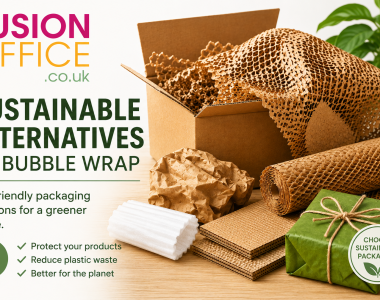
- Ranpak Geami WrapPak: expands kraft paper into a honeycomb that replaces bubble wrap for surface protection and light impact resistance. Ideal for homeware, beauty, gifts and boxed electronics.
- Bubble wrap: still useful for high-impact or point-load protection, but consider a bubble wrap roll only when the risk profile demands it.
Best alternative to bubble wrap:
- For most retail and e-commerce orders, Ranpak Geami or a good-quality paper wrap is the best alternative. It reduces plastic, speeds packing and looks premium.
Paper mailers vs boxes
Paper mailing bags and all-board envelopes reduce weight and plastic while protecting soft goods.
Choose mailers when:
- Products are soft or boxed already, like apparel, textiles, boxed cosmetics or small gifts.
- You want to hit Large Letter or Small Parcel at the lowest weight.
- Returns are common, using double peel-and-seal formats.
Choose boxes when:
- Contents are fragile, heavy, sharp-edged or need structure for stacking.
- There are multiple items with space for cushioning between them.
Fusion’s recyclable paper mailers and rigid all-board envelopes help you trim plastic and postage. For box-first operations, see Fusion’s cardboard boxes for Q4 replenishment.
Right-sizing to Royal Mail categories
- Measure external length x width x depth including bulges.
- Large Letter: keep to letterbox-friendly postal boxes and slim wraps. Use conforming sizes like 320 x 230 x 19 mm.
- Small Parcel: choose compact tuck-in postal boxes and book wraps with adjustable depth to avoid tipping into Medium Parcel.
- Weight: do not over-spec materials. Lighter but protective combinations, like single wall plus paper void fill, often beat heavier packaging when loads are under 2 kg.
Sealing, labelling and handling marks
- Seal bottoms first using the H method. Pre-crease flaps so they sit flat, then apply firm pressure with your dispenser.
- Place the address label on the largest facing panel, avoiding seams and corners. Remove old labels if reusing packaging.
- Add FRAGILE or DO NOT STACK labels where handling matters. These are not guarantees, but they guide conveyors and pick teams and reduce the chance of stacking damage.
- Use a documents enclosed pouch or print directly to integrated labels for speed. Thermal label printers produce scannable, smudge-free barcodes in busy packing rooms. Fusion stocks label printers and thermal label printers for dispatch benches.
Made-to-measure, printed and peak readiness
Odd-size SKUs, subscription kits and gift sets benefit from made-to-measure boxes to cut void, damage and postage. Printed tape, postal wraps and boxes also lift unboxing and reduce returns confusion. Fusion can quote for custom sizes and printed boxes or tapes, and supplies core packaging supplies fast from UK stock with bulk-buy savings.
Quick how-to for Post Office-ready packs
- Choose the smallest fit-for-purpose pack. Test with the Royal Mail size guide where possible.
- Protect on all sides. Wrap items first, then brace with paper void fill so nothing rattles.
- Seal using the H method. Do not rely on folding tabs.
- Label clearly on a flat face. Avoid seams. Add FRAGILE or DO NOT STACK if relevant.
- Weigh and measure before you go. Keep a crib sheet of your common pack SKUs and their final size bands.
FAQ
Is it better to tape or fold moving boxes?
- Tape. Folding-only closures fail under load and movement. Use the H method with suitable tape. Single wall for lighter household contents; double wall for books, kitchenware and stacked moves. Fusion’s moving boxes are designed for this.
What is the best alternative to bubble wrap?
- Paper-based wraps like Ranpak Geami for scuff protection and light impact, paired with FillPak paper for bracing. They are recyclable, quick to use and present well.
What packaging tape is best, and why will not mine stick?
- Vinyl for heavier cartons or cooler rooms, acrylic for light everyday packing, kraft paper tape for recyclability and strong presentation. Clean the surface, apply firm pressure with a dispenser, and avoid packing in damp or very cold conditions. Switch adhesive type if problems persist.
Are postage bags better than boxes?
- For soft or already boxed products, paper mailing bags are lighter and cheaper to ship. For fragile, heavy or stackable goods, boxes protect better and survive conveyors.
How should I pack things for the Post Office?
- Right-size the pack to the correct Royal Mail band, wrap items, brace voids with paper, seal using the H method, place a flat label, and add handling marks where needed.
Final check-list for Q4
- Match wall strength to weight and journey.
- Use the right tape for your room temperature and board.
- Move to paper-based wraps and void fill where risk allows.
- Choose mailers for soft goods, boxes for structure or fragility.
- Seal with the H method, label flat, and right-size every time.
Need fast replenishment or a quote on custom sizes or printed boxes? Fusion Office can help. Explore everyday packaging supplies and time-saving kit like label printers to get peak-ready without the scramble.