The friendly UK guide to ergonomic office chairs for long hours
The new tax year is a good moment to sort your seating. Whether you manage a team or work from home, the right chair can help you stay comfortable, focused and ready for long days without the aches.
This guide keeps things simple. We will explain the difference between ergonomic and task chairs, the key adjustments that matter, how to pick fabrics and frames that last, and how to set your chair up properly. You will also find a quick bulk order checklist for office moves and refits.
Fusion Office supplies a wide range of operator and task chairs with optional installation and typical 2 to 5 day delivery across the UK mainland. If you need help shortlisting models for mixed teams, the friendly Fusion team can do the legwork with you.
Ergonomic vs task chairs, what is the difference?
Task chair is the everyday office work chair category. Ergonomic chair refers to task chairs that include features designed to support healthy posture for different body sizes over longer periods. In practice, many modern task chairs are ergonomic, but not all are equally adjustable.
- A basic task chair might offer seat height and fixed arms.
- An ergonomic task chair typically adds lumbar support, seat depth adjustment (also called a seat slide), multi tilt options, and height and width adjustable armrests.
If you are buying for long hours, choose a chair described as ergonomic plus check for the specific adjustments below rather than relying on labels alone.
The must-have adjustments for long hours
For long sessions at the desk, look for these features as a baseline:
- Seat height: Gas-lift adjustment so your thighs are level and feet flat on the floor, or on a footrest if you are petite.
- Lumbar support: Either a height-adjustable backrest with a pronounced lumbar curve or a separate adjustable lumbar pad. This helps maintain the natural curve of your lower back.
- Seat depth (seat slide): Lets you move the seat pan forward or back so you have 2 to 3 fingers of space between the seat edge and the back of your knees. Vital for comfort if you are taller or shorter than average.
- Back tilt with tension control: A synchronous or knee-tilt mechanism that lets the backrest recline with you while keeping the seat stable, with a dial to set the resistance to your body weight. A lockable upright position is handy for focused typing.
- Adjustable armrests: Height as a minimum so shoulders can relax. Width and depth (front-back) adjustment is better for different builds and tasks. Soft pads are kinder on forearms.
Nice-to-have extras include a quick seat angle adjustment for forward tilt, 4D arms, and a headrest if you regularly lean back for calls or reading.
Fabric or mesh?
Both can work well for long hours, so it comes down to preference, temperature and maintenance.
- Mesh backs breathe well and flex to your shape. They stay cooler in warm offices and feel supportive without bulk. Check for good lumbar shaping and firm mesh that will not sag.
- Fabric upholstery with foam padding can feel more cushioned. It is often quieter, hides wear well, and can be easier to match with existing office furniture. Look for high density foam to avoid early flattening.
If your office runs warm, a mesh back with a fabric seat is a popular compromise. Fusion Office stocks both styles within its ergonomic office chairs range.
Weight ratings, warranties and UK lead times
A good chair is an investment, so check the spec sheet.
- Weight rating: Many office chairs are rated around 110 to 150 kg. Choose a rating that comfortably covers the heaviest regular user to protect both the person and the mechanism.
- Warranties: Look for multi-year coverage on the frame and moving parts. Warranties vary by manufacturer, so confirm details on the product page.
- Lead times: For UK offices, typical delivery for stocked chairs is 2 to 5 days. Fusion Office offers ground floor reception delivery as standard, with optional installation by quote if you prefer a ready built setup.
How to set up your chair and desk for 5’8″ to 6’0″
Use this as a practical starting point. Fine-tune until it feels natural.
- Chair height: Sit back in the chair. Raise or lower the seat until your hips are level with or slightly above your knees. Feet should be flat on the floor. If your desk is higher than standard, you may raise the chair and add a footrest to keep feet supported.
- Seat depth: Slide the seat so you have a 2 to 3 finger gap between the seat front and the back of your knees. This prevents pressure on your calves.
- Backrest and lumbar: Raise the backrest or lumbar pad until it sits in the small of your back, roughly in line with the beltline. Set tilt tension so the back moves with you yet still supports you. Many people prefer a gentle recline rather than a rigid upright posture.
- Armrests: Adjust height so your shoulders are relaxed, not hunched. When your elbows are at about 90 degrees, your forearms should skim the arm pads without lifting your shoulders. Move the arms in or out so they support you close to your body.
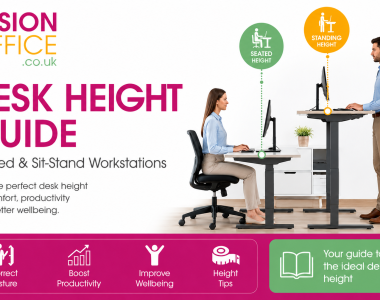
- Desk height and screen: For a typical 5’8″ to 6’0″ person at a standard office desk (about 720 to 740 mm high), your chair height should let your forearms rest parallel to the desk when typing. Raise your screen so the top line of text is at or just below eye level. If you use a laptop, add a stand and separate keyboard.
If you use sit stand desks, set the standing height so elbows are at 90 degrees with shoulders relaxed. Keep the same screen eye line.
What is the best office chair for long hours in the UK?
There is no single winner for everyone. The best chair is one that fits your body, offers the adjustments listed above, and suits your working style and space. Shortlist a few ergonomic task chairs, confirm the weight rating and warranty, and, if possible, trial one for a week. Fusion Office can help you compare options across its office chairs range and advise on mixed-chair orders for different teams.
What to look for in a comfortable office chair
Comfort comes from fit and support, not just padding. Prioritise adjustable lumbar support, a seat slide, back tilt with tension control, and armrests you can position under your forearms without shrugging your shoulders. Choose a breathable finish for warm rooms and a stable base with smooth casters suited to your floor type.
Do you really need an ergonomic office chair?
If you sit for several hours most days, an ergonomic chair is a sound choice. It helps you maintain a neutral posture, vary your position through the day, and reduce common pressure points. You can work around a basic chair with cushions and frequent breaks, but a well specified ergonomic task chair makes it easier to stay comfortable without constant tweaking.
How much should you budget?
Pricing varies by brand, fabric and mechanism. As a simple guide in the UK market:
- Entry level task chairs with limited adjustment often start at lower price points.
- Mid range ergonomic task chairs with the key adjustments usually sit in a moderate bracket and offer strong value for long hours.
- Premium models with advanced mechanisms, 4D arms and headrests cost more.
Fusion Office focuses on best value pricing across its office furniture range, so you can compare models at different levels without paying over the odds. Exact prices are shown on product pages and can vary by finish and configuration.
A quick bulk order checklist
Use this when ordering for a team or a whole floor:
- Confirm seat height range, seat depth adjustment, lumbar support and tilt mechanism.
- Choose arm type, adjustable as standard for most roles.
- Pick fabric or mesh, and colour to suit your space.
- Check weight rating covers your user range.
- Note warranty length and what it covers.
- Confirm delivery address access and whether you want optional installation.
- Align delivery timing with move-in dates. Most stocked chairs arrive in 2 to 5 days in the UK.
Helpful Fusion Office links
If you are planning a wider refresh, these categories can help:
- Explore ergonomic office chairs and operator models in Fusion Office’s office chairs section.
- If you need new desks to pair with your chairs, see the range of workplace desks and computer desks.
- For height flexible setups, look at adjustable height office desks.
Short FAQ
- What is the difference between an ergonomic chair and a task chair? A task chair is a general office chair. An ergonomic task chair adds adjustable features such as lumbar support, seat depth and multi tilt to fit different people and long sessions.
- What is the best office chair for sitting long hours in the UK? The best option is an ergonomic task chair that fits you, has the key adjustments, and suits your space. Shortlist a few and compare weight ratings, warranties and delivery times.
- Do you really need an ergonomic office chair? If you sit most of the day, yes, it typically pays off in comfort and support.
- What should you look for in a comfortable office chair? Seat height, lumbar support, seat depth, back tilt with tension and adjustable arms. Then pick the finish and base quality you prefer.
- What is a decent price for an office chair? It depends on features and build. Mid range ergonomic task chairs usually deliver the best balance of adjustment, durability and value. Check Fusion Office product pages for current pricing.
Summary and next step
A well chosen ergonomic task chair is one of the simplest ways to improve comfort and focus during long hours. Prioritise core adjustments, pick a finish that suits your workplace, check weight ratings and warranties, and set the chair up carefully for your height. If you are planning a larger fit-out or need a mix of mesh and fabric chairs across different teams, speak to the Fusion Office team. They can recommend models, coordinate optional installation and arrange typical 2 to 5 day UK delivery so everything arrives when you need it.
Internal links used:
- office chairs: https://www.fusionoffice.co.uk/product-category/office-furniture-and-interiors/office-chairs/
- workplace desks: https://www.fusionoffice.co.uk/product-category/office-furniture-and-interiors/desking/
- adjustable height office desks: https://www.fusionoffice.co.uk/standing-desks